
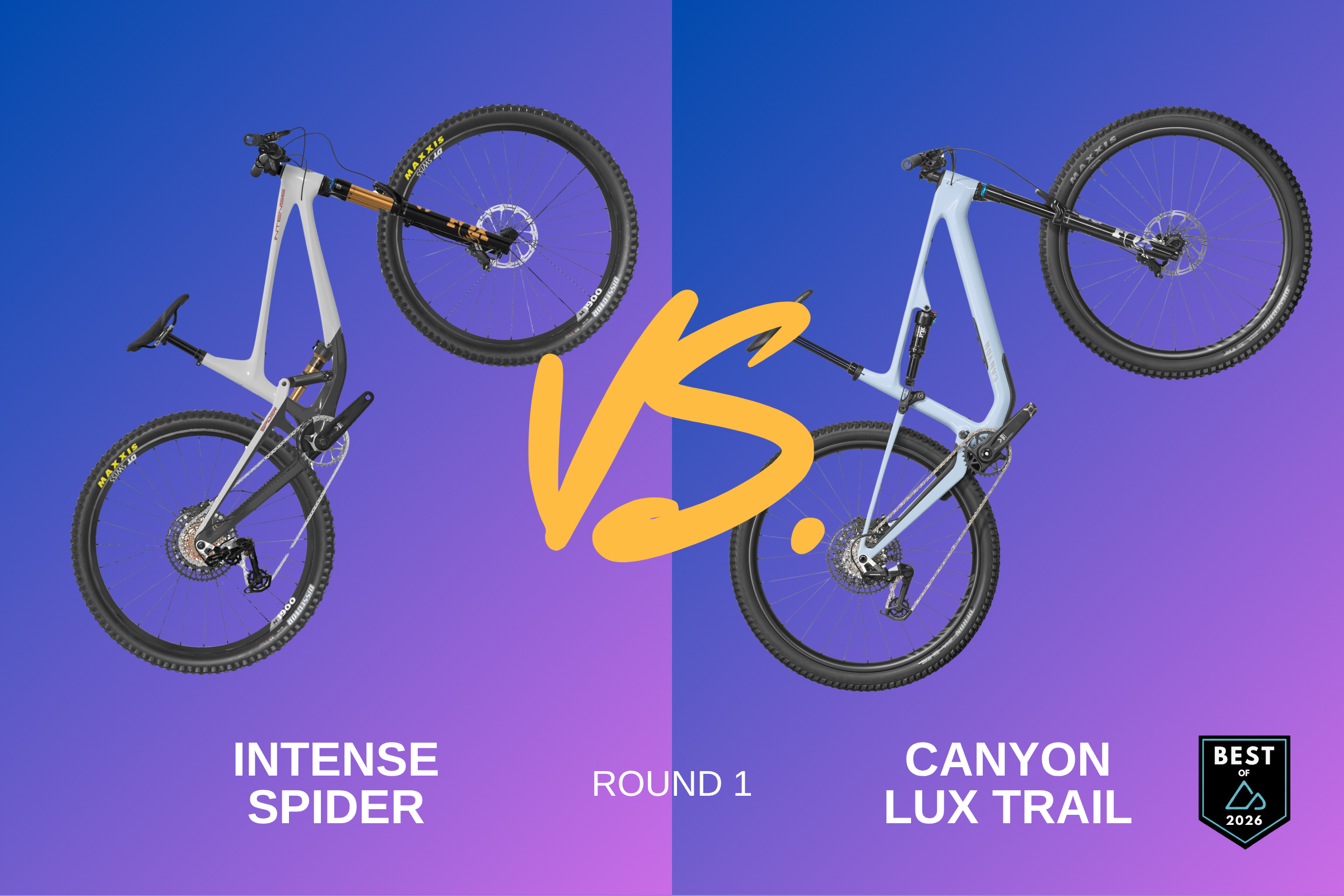
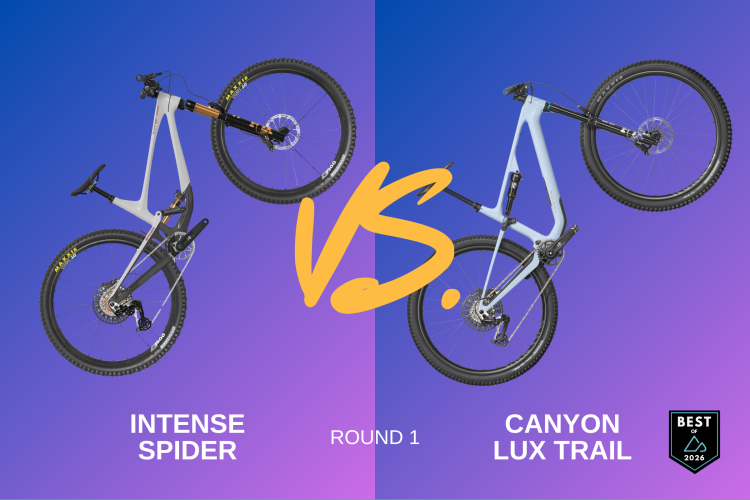
The Intense Spider — last updated in 2025 — was one of the surprise favorites among this year’s Trail Bike of the Year nominations, and in the first round of competition it draws one of the newest bikes in the field, the redesigned Canyon Lux Trail. On paper, the two are pretty similar, with 29-inch wheels and size large geometry that differs by a few millimeters at most. However, when it comes to weight, frame features, and build options, these bikes are very different.
| Canyon Lux Trail CF 7 | Intense Spider Foundation* | |
|---|---|---|
| Travel front/rear | 140mm/125mm | 130mm/130mm |
| Drivetrain | SRAM Eagle 90 Transmission | SRAM Eagle 90 Transmission |
| Suspension | Fox 36 SL Performance fork, Fox Float Performance shock | Fox Factory fork and shock |
| Wheels | Canyon XC 30 CF carbon | DT Swiss M1900 |
| Geometry (size large) | HTA: 64.8° STA: 76.1° Reach: 470mm Chainstays: 440mm | HTA: 65° STA: 78° Reach: 475mm Chainstays: 435mm |
| Weight | 28.22lb (medium) | 30.05lb (medium) |
| Price | $4,999 | $4,974 |
Suspension travel and category positioning
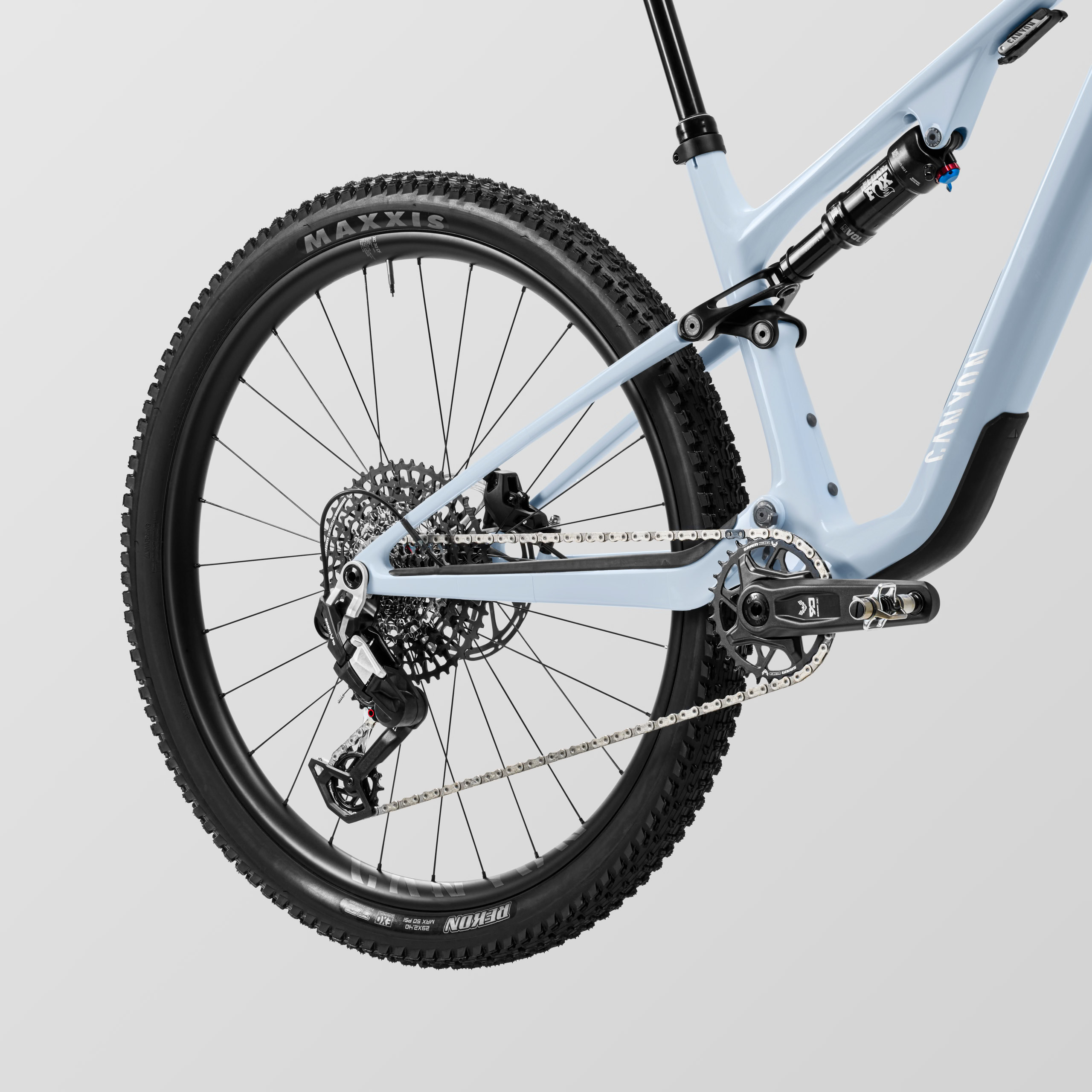
Canyon calls the Lux Trail a short-travel trail bike, but with 140mm up front, 125mm out back, and a slack head angle, it’s the brand’s first true downcountry bike in our view. The rear end uses a one-piece carbon flex-stay rather than a pivot near the axle, a design borrowed from XC race bikes that saves weight. We’re testing one now, and it’s already clear that the 140mm Fox 36 SL fork smooths out chunky trails better than the previous generation’s 120mm fork.
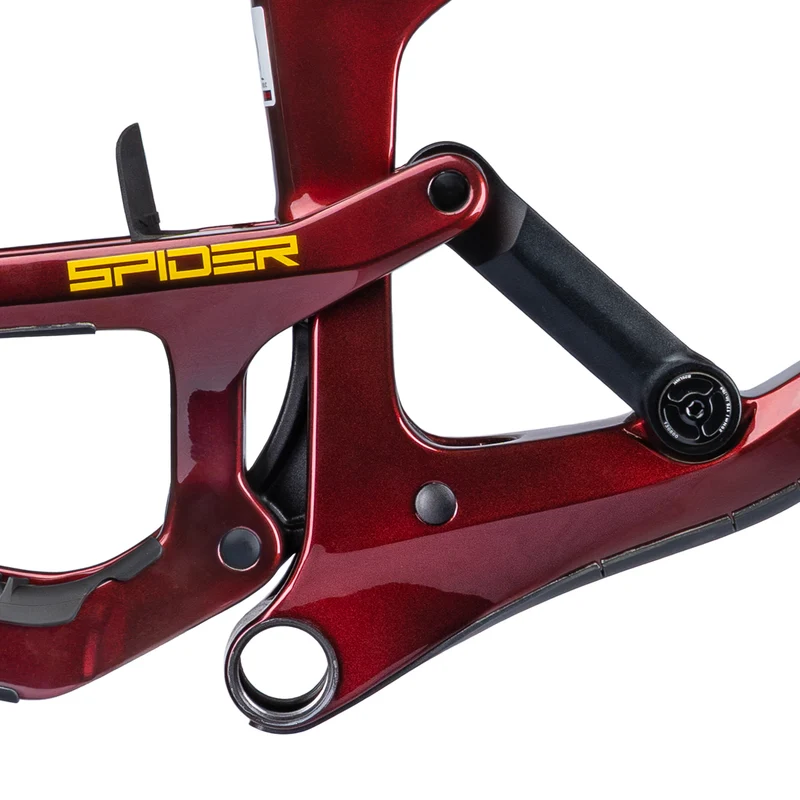
The Intense Spider takes a more balanced approach, with 130mm of travel at both ends. Intense slots it into what it calls the “Trail Light” category, and the Spider uses the brand’s Dual Co-Rotating Link (DCR) suspension.
The Spider name carries plenty of history. Intense says it’s the model that launched the brand more than 30 years ago. The current carbon frame is a ground-up redesign, and unlike the last version, which was offered only with 27.5-inch wheels, this one’s a 29er only.
Geometry: Nearly identical, with one big exception
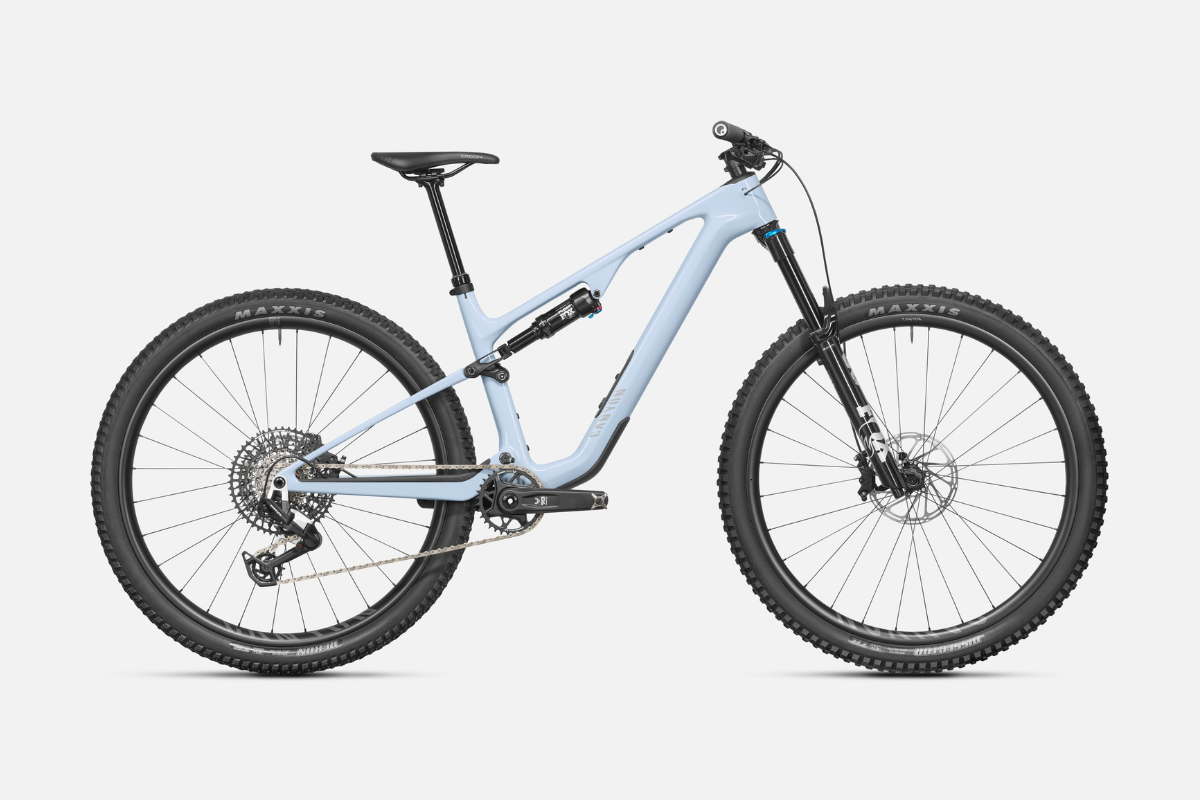
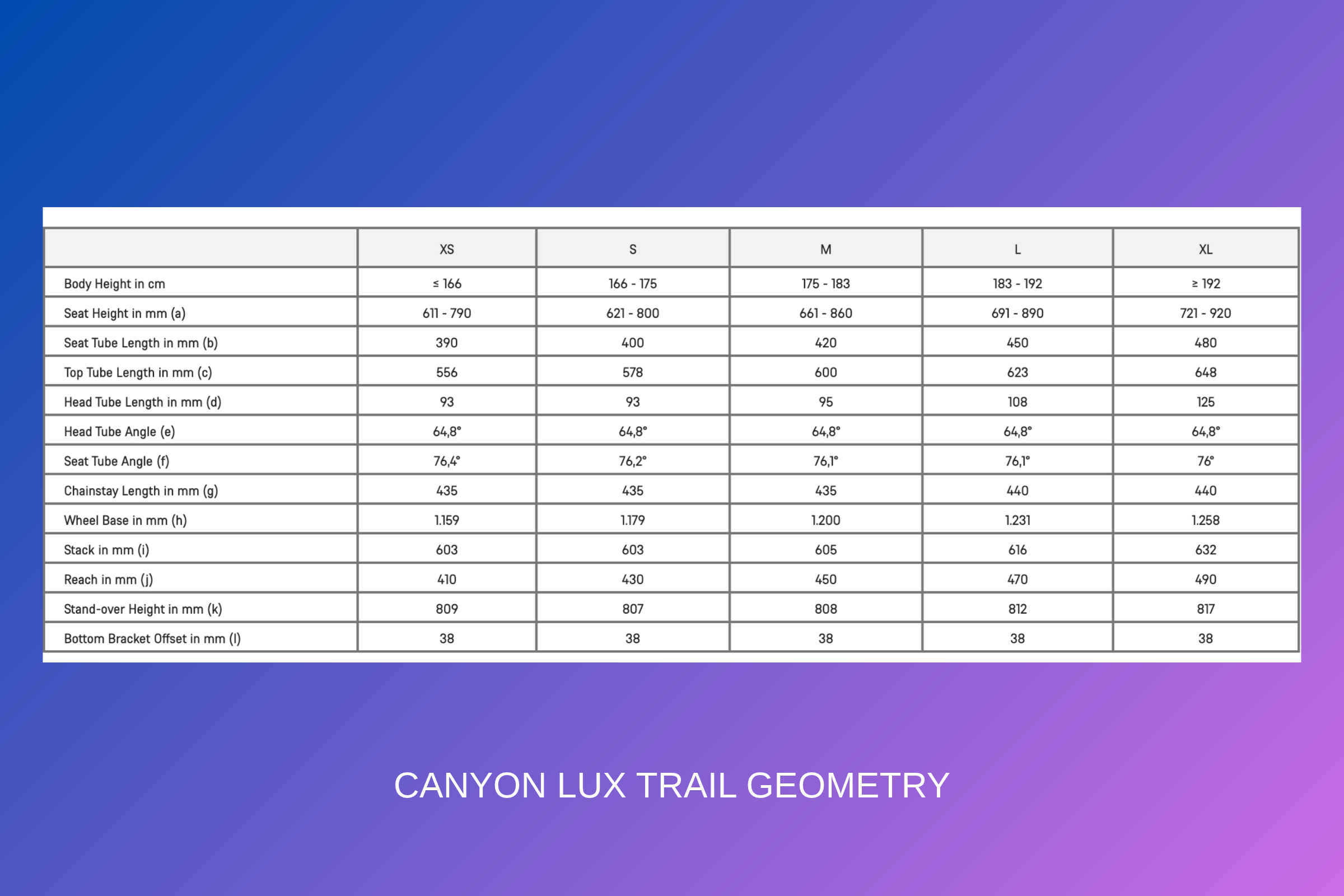
In size large, the Lux Trail and Spider are within 5mm on reach, 4mm on stack, and 1mm on wheelbase, and their head angles differ by just 0.2°. Bottom bracket drop is effectively the same, too, at 38mm for the Canyon and 38.5mm for the Intense.
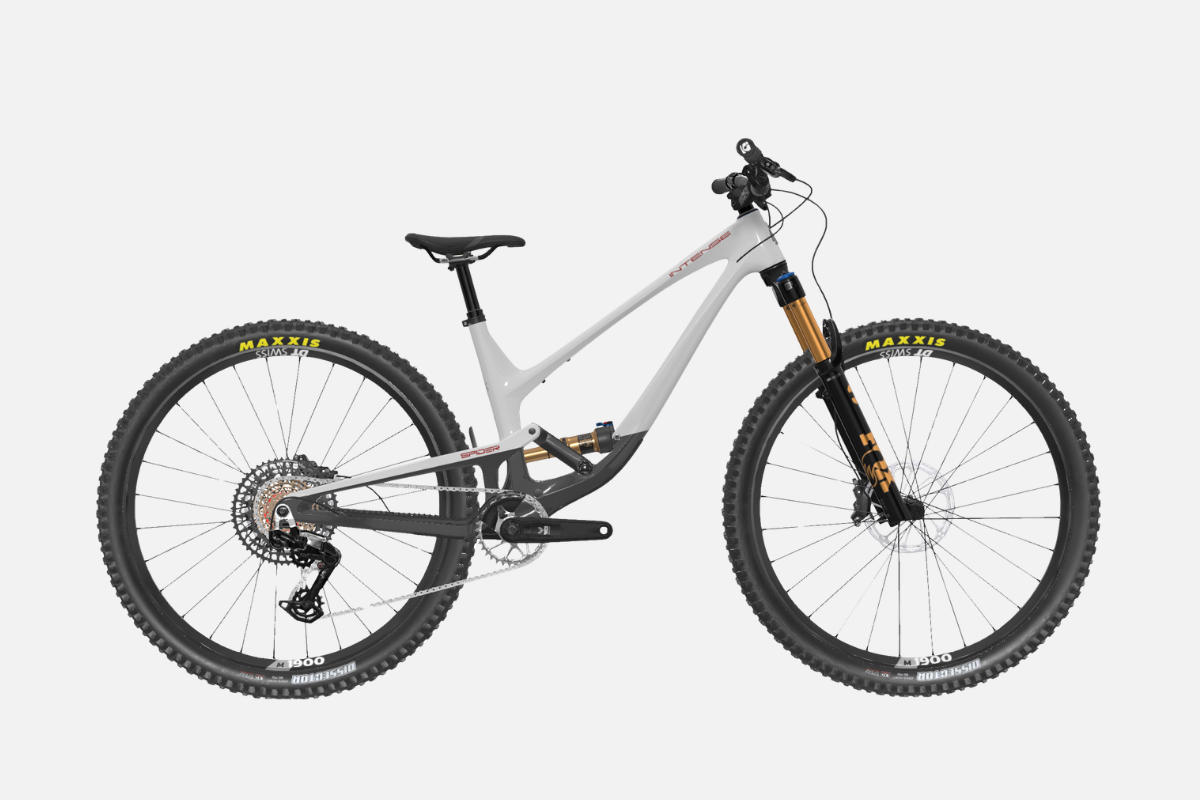
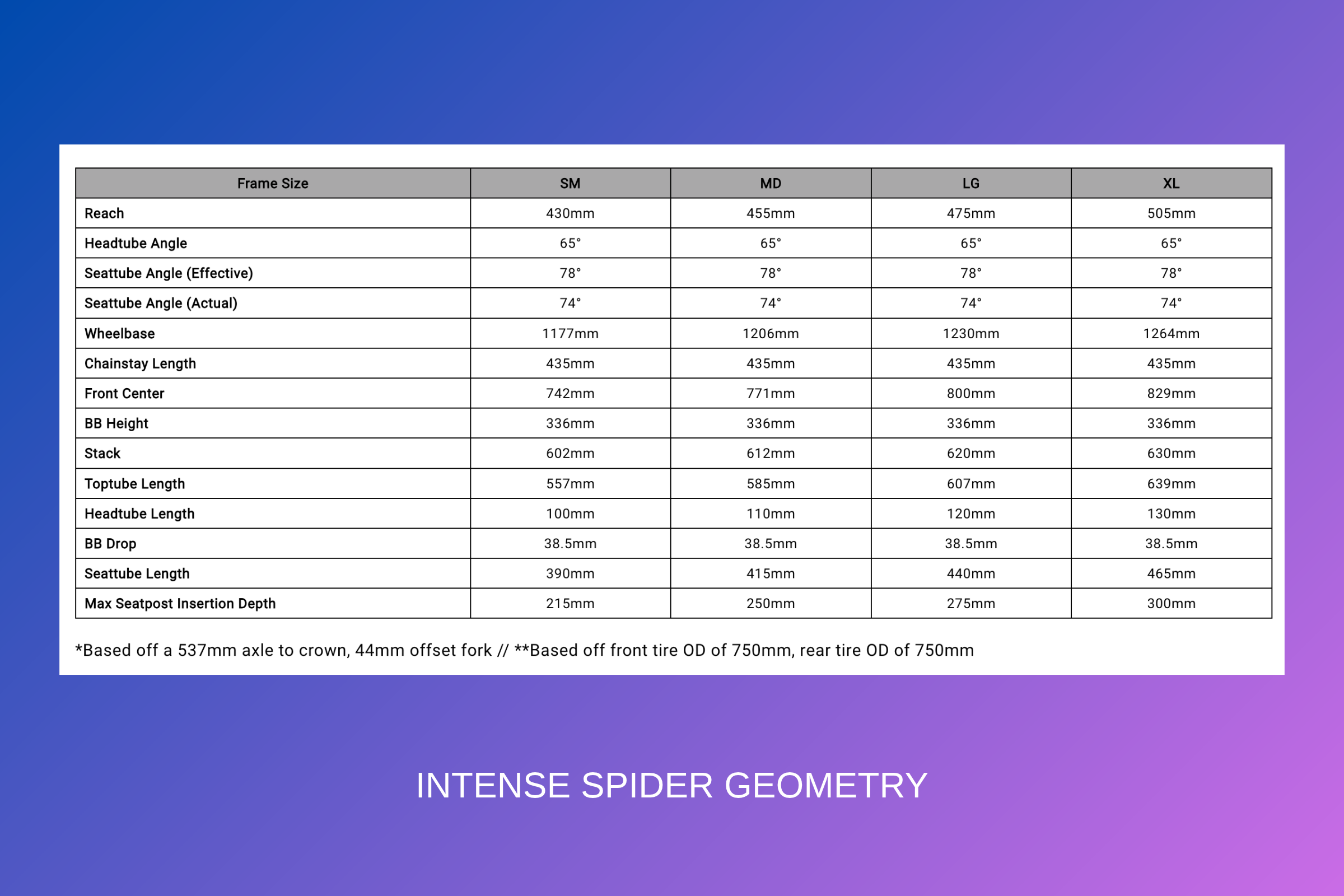
The seat angle is where they differ. The Spider’s 78° effective seat angle is nearly two degrees steeper than the Lux Trail’s 76.1°, which should put riders in a more upright, forward position for steep climbs. Chainstays are another small point of difference. Intense uses 435mm stays on every size, while Canyon goes with 435mm on XS through medium and 440mm on large and XL to keep handling consistent as riders get taller.
Canyon also offers one more size, with the Lux Trail available from XS to XL compared to small through XL for the Spider.
Frame features and weight
Weight is the Lux Trail’s trump card, which isn’t surprising given its connection to the race-winning Lux cross-country bike. Canyon claims 1,850g for a medium frame, while Intense lists the medium Spider frame at 2,720g (6lb) without a shock, a difference of 870g, or nearly two pounds. With the lightweight frame, the CF 7 build comes in at a claimed 28.22lb complete. The modified Spider Foundation build we put together for this comparison is said to weigh a smidge over 30lb. Both frames are made from carbon fiber.
The Canyon also has more on-board carrying capacity. It gets a watertight in-frame storage compartment with a tool sleeve and multi-tool included, plus room for two bottles in the front triangle. The Spider has one bottle mount and an accessory mount under the top tube for tools and CO2, with no internal storage.
The Spider comes with integrated frame guards on the front and rear triangles and a built-in fender to keep mud off the shock.
Buying and building: Direct vs. dealer
The Lux Trail is sold only through Canyon’s website and app, and the CF 7 costs $4,999 plus $99 for shipping in the USA. That money buys a carbon wheelset, a Fox 36 SL fork, and SRAM’s Eagle 90 Transmission drivetrain.
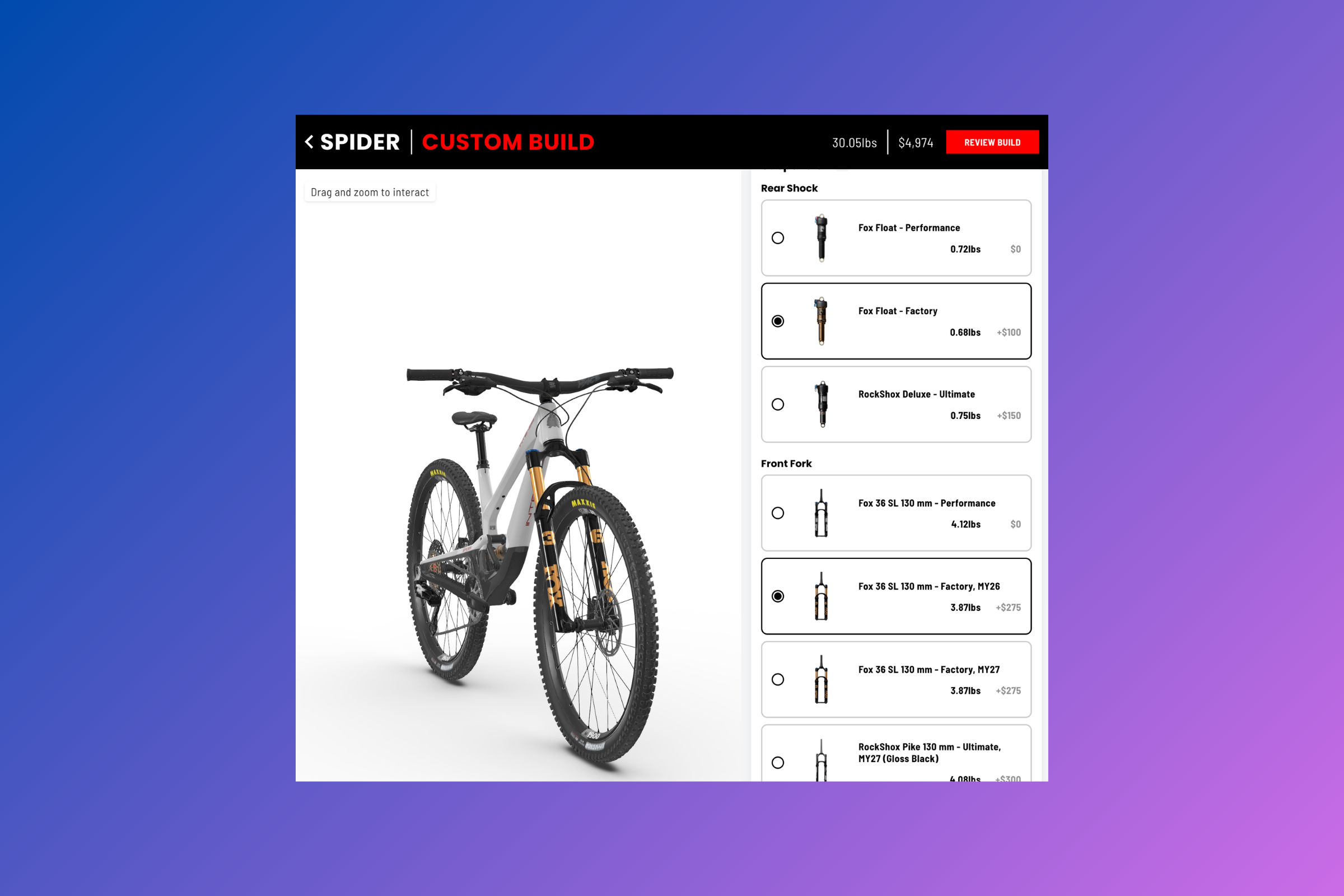
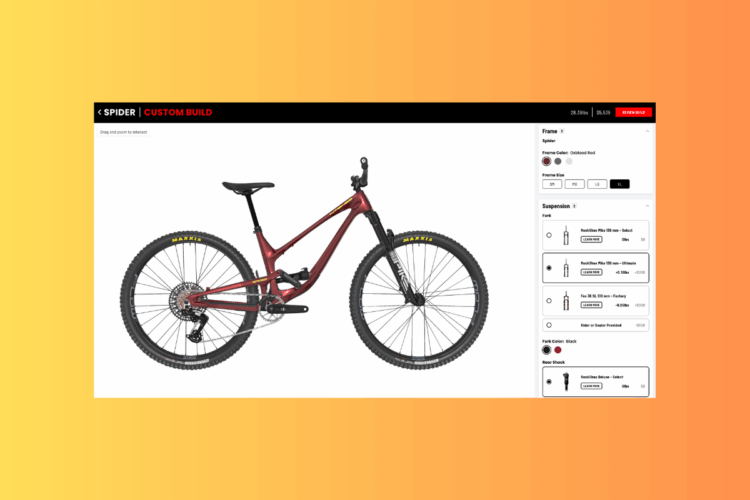
Intense launched the Spider as a frame-only offering in 2025, and complete builds followed this year. Riders can start with the $3,399 frameset, which includes a choice of Fox or RockShox shock, and spec everything else using Intense’s 3D configurator. We counted more than 1.6 million possible Spider builds when the configurator launched last fall. Orders go through a local Intense dealer, who builds the bike, which buyers can have shipped to home or pick up in store.
The $4,499 Spider Foundation build is priced $500 less than the Lux Trail CF 7, though it rolls on DT Swiss M1900 wheels rather than carbon hoops. I’m actually pretty shocked to see carbon wheels on a bike at this price point, and that could be a big selling point for some riders considering the Lux Trail.
To get the prices closer together, I used the Intense online configurator to upgrade to Fox Factory suspension and a full Eagle 90 drivetrain for just under $5,000. At the time of writing, Intense is advertising $500 off the Spider with a promo code, which would get the price of the Spider well under the Lux Trail. That’s not quite enough to upgrade the Spider to DT Swiss XMC 1700 carbon wheels, but buyers are still getting upgraded suspension over the Lux Trail.
Both bikes come with a Maxxis Dissector tire up front. At the back of the bike, Intense specs the Dissector, while the Lux Trail goes with a Maxxis Rekon.
The bottom line
With geometry this close, the choice comes down to what you value beyond the numbers. Want the lighter frame, built-in storage, and carbon wheels out of the box? The Lux Trail delivers all three. Prefer a dual-link bike, top-shelf suspension, and the ability to pick your own parts? The Spider is your bike, and it costs a little less. Either way, you’re getting a high-performance, efficient trail bike that’s happy to go fast on rough descents.
The winner advances to round two on November 13 to face either the Transition Spur or Revel Ranger.
Keep up with the latest mountain bike news by adding Singletracks as a preferred source on Google.



0 Comments