
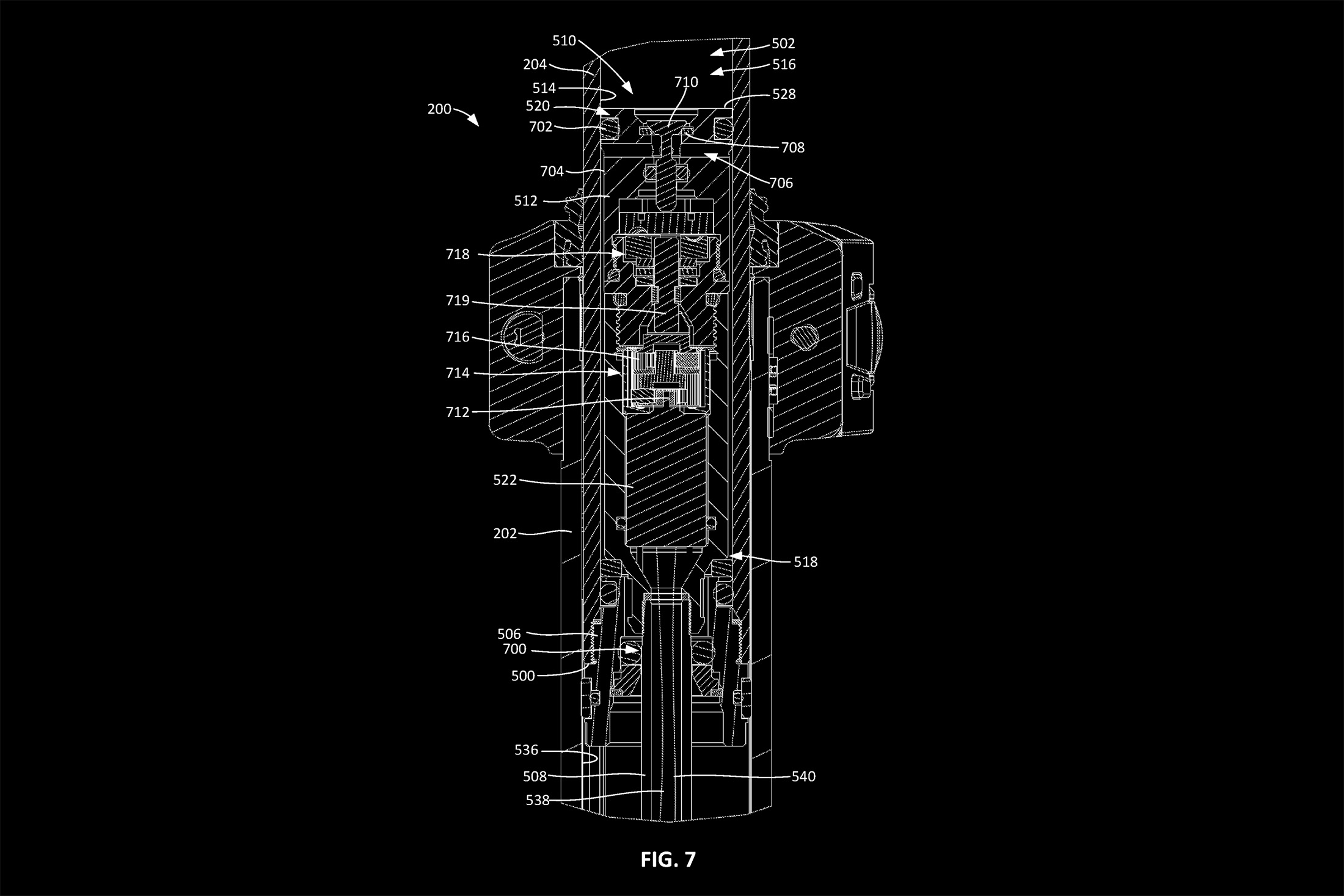
In my opinion, the dropper post is hands down the biggest mountain bike innovation ever. Of course you’re free to disagree, but you’re wrong. Designs have evolved drastically from the externally sprung Hite-Rite of the mid-80s to the mechanically actuated, hydraulic post designs of the 2000s to the wireless, electronic posts of today. Along the way, they’ve become downright complicated.
One thing most of us likely never considered is how our electronic dropper posts actually work. In researching a new patent application from SRAM, I learned that there’s a lot of work that goes into translating an electrical signal into mechanical work, and that, at least in SRAM’s estimation, there’s room for improvement.
An electrical current engages a motor to actuate the post, but existing designs are said to waste energy
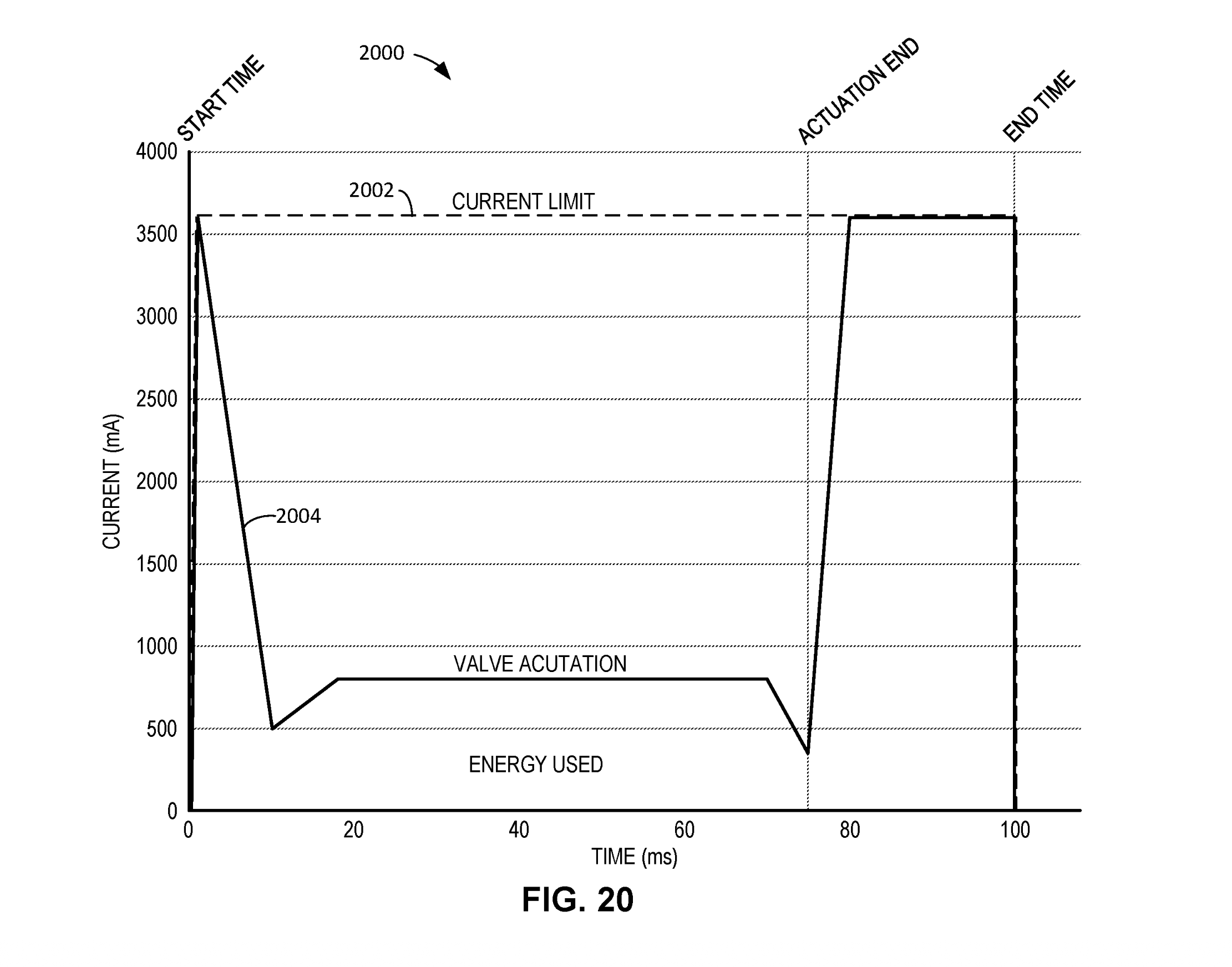
Some electronic dropper posts use a motor to open and close the valve that allows the post to go up and down. The rider presses a button, a current is sent to the motor, and the valve opens. It takes a high initial current to overcome the valve’s static friction. However, once the valve is in motion, it takes less current to keep it moving. When the valve reaches its end state and is either fully open or closed, the motor keeps pushing for a predetermined amount of time. Because the valve is stopped, the motor draws more current as it pushes against the stop. You can see what this looks like in the chart above, left (labeled Fig. 20 from the patent application).
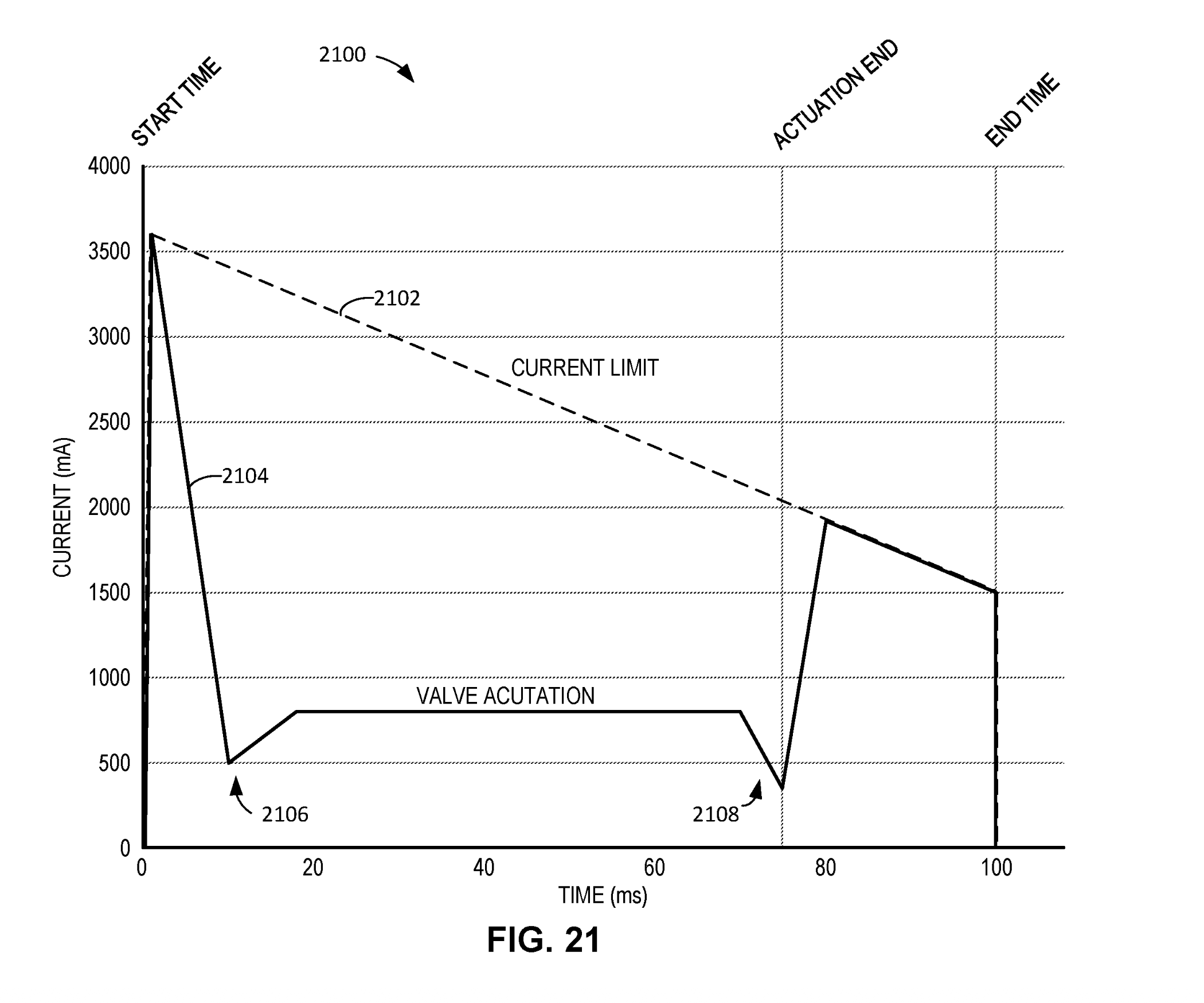
According to the SRAM patent application, filed in April, 2025, there’s a better way, and one that uses less current, which could extend battery life. Rather than using the same maximum current cap for the full time, a reduced cap is set for the end of the actuation in one example (chart above, right).
In addition to reducing energy consumption (and presumably, increasing battery life), the patent application suggests using a lower current at the end of the actuation means less wear and tear on the parts thanks to a gentler finish. Or, as the document suggests, this could allow the use of “lighter, softer, and less expensive materials (e.g., plastic).”
Some existing electronic dropper post designs make use of a position sensor so the motor knows when the valve is completely open or closed and the current can be shut off. However, because this adds weight and complexity (and likely cost), some posts skip the sensor and pad the motor’s run time at the end of actuation to ensure it’s closed, which ultimately wastes power. The SRAM patent application points out that by using lower power output at the end of the actuation, the potential for wasted power is reduced even with padding and without a sensor.

Of course, this is just a patent application, so there’s no guarantee that it will be granted, or that the design will ever make it into a finished product. And even if it does, the benefits will likely go unnoticed by most riders. After all, we’re talking about grams of potential weight savings and perhaps a few extra post drops per battery charge. To be clear, an electronic dropper post is still going to weigh much more than an equivalent mechanical post, which delivers infinity drops with zero battery charges.
Still, it’s an interesting look at the level of detail that goes into the design and refinement of today’s modern dropper posts. And with components increasingly going electric, software tweaks can affect hardware choices, rather than the other way around.
Keep up with the latest mountain bike news by adding Singletracks as a preferred source on Google.






0 Comments